Resources
Blog Article

Closing a Key Gap in DSCSA Compliance
Jun 23, 2022
Check out Chris' piece in Pharmaceutical Commerce’s June issue, where she shares how OCI’s work on credential standards is enabling interoperable DSCSA solutions across the pharma supply chain.

Identity in a Circular Future — Part 2/2
Jun 16, 2020
To make circular economy models economically viable, especially for low-value transactions like recycling or refurbishment, we need persistent, verifiable data on every product's lifecycle. This article outlines Spherity’s vision for a “Circular Cloud” — an open, accessible system that enables data traceability and supports enforcement of circular regulations while unlocking new business models through decentralized cooperation.
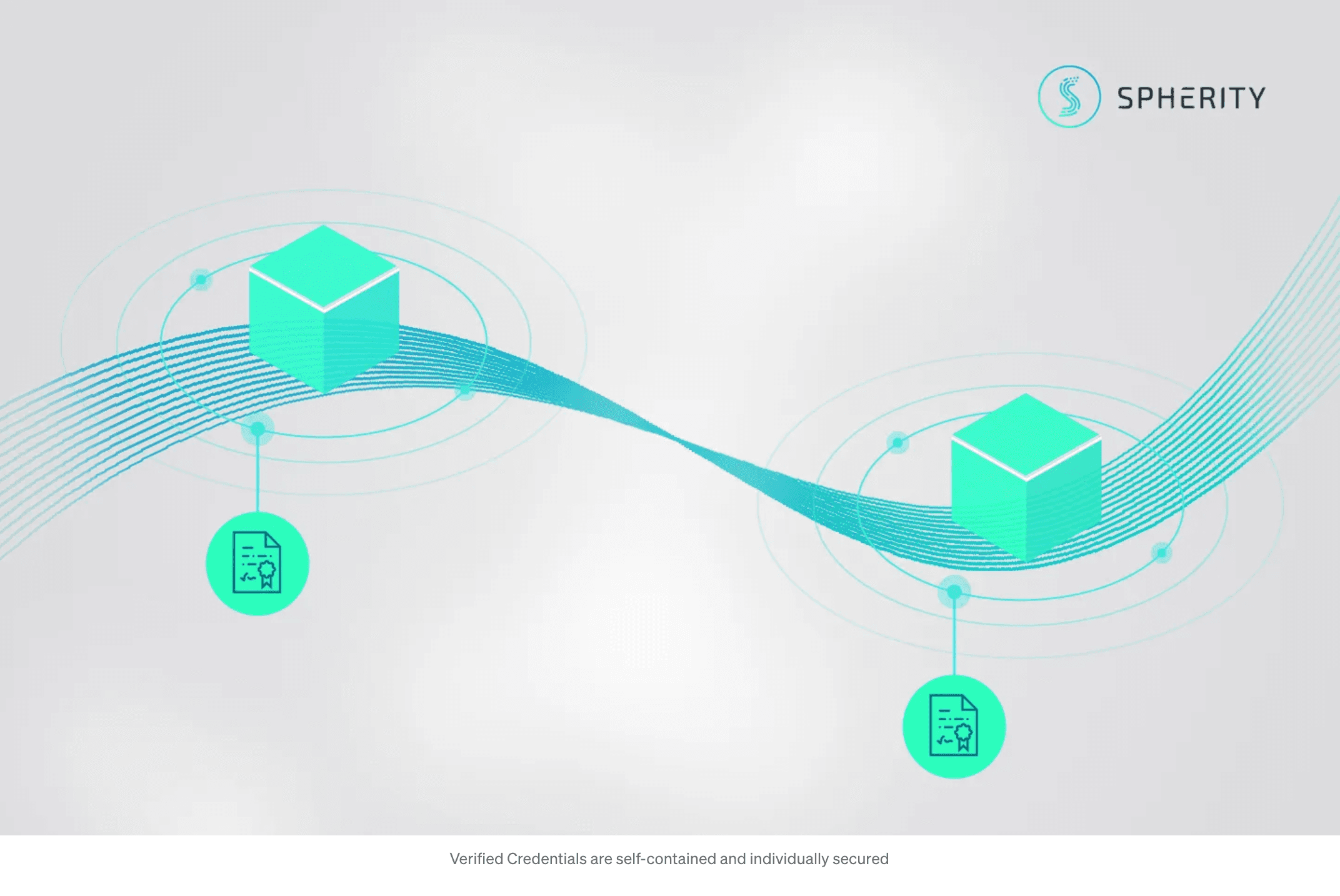
#SSI101: Verified Credentials and Data Portability
Jun 8, 2020
In this #SSI101 glossary entry, we unpack Verifiable Credentials—secure, self-contained data capsules that bundle information with identity and context, making them portable, trustworthy, and ready for encryption, verification, and access control across digital systems.
Case studies

How BVG Implemented Digital Battery Passports with Spherity
Oct 1, 2025
BVG, Berlin's public transport provider, partnered with Spherity to implement Digital Product Passports for their electric bus fleet batteries.
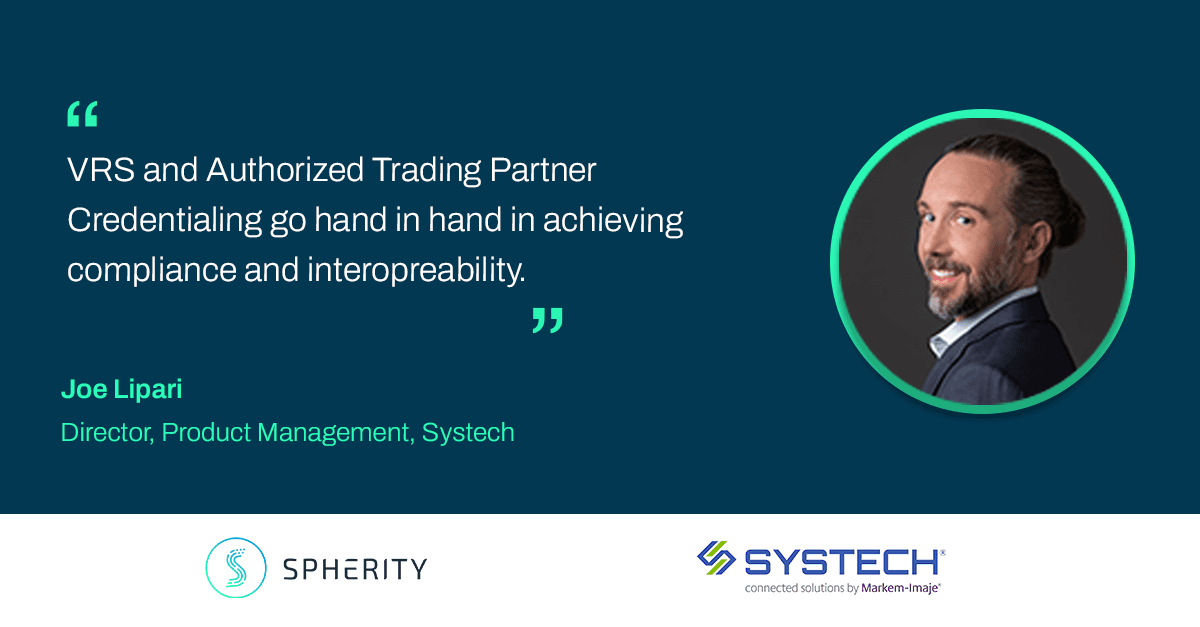
How Systech and Spherity successfully collaborate to support US Trading Partners with DSCSA compliance
Mar 21, 2024
Discover how Systech and Spherity partnered to help U.S. trading partners achieve seamless DSCSA compliance through secure, interoperable solutions.
Videos
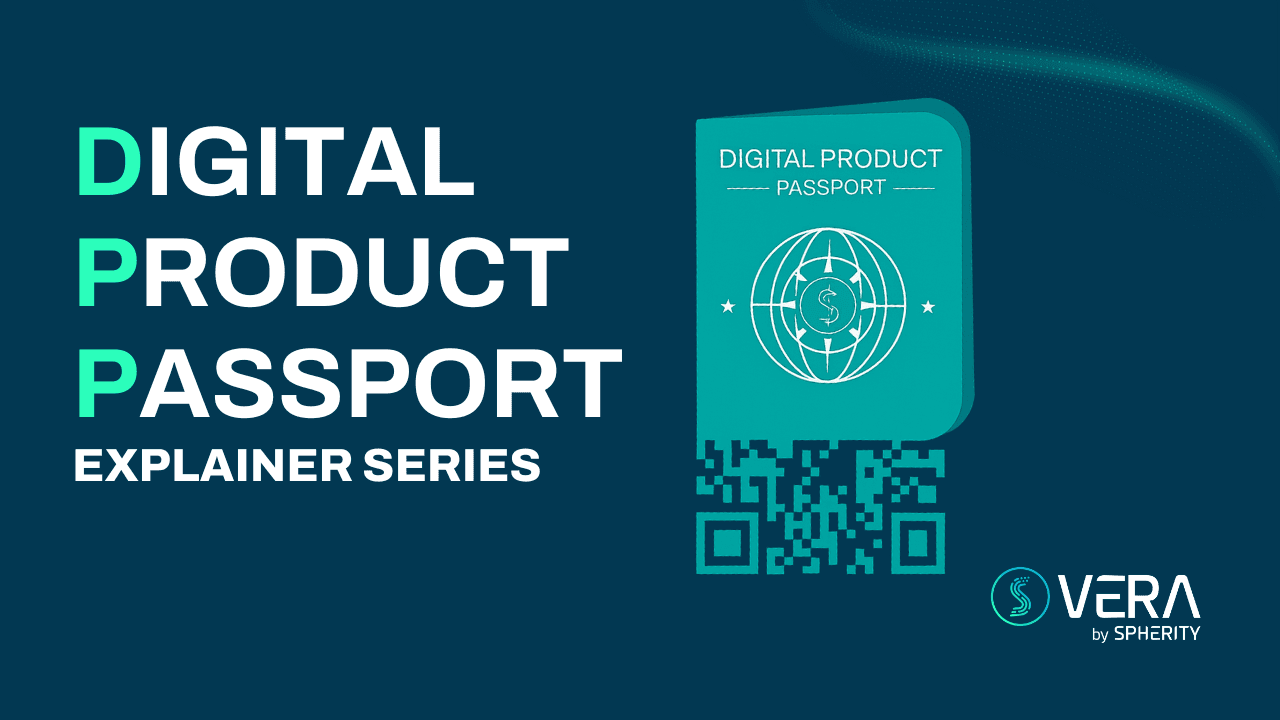
Digital Product Passport Explainer Video Series
Learn what Digital Product Passports (DPPs) are, why they matter, and how EU regulations like ESPR and the Battery Regulation impact your business.
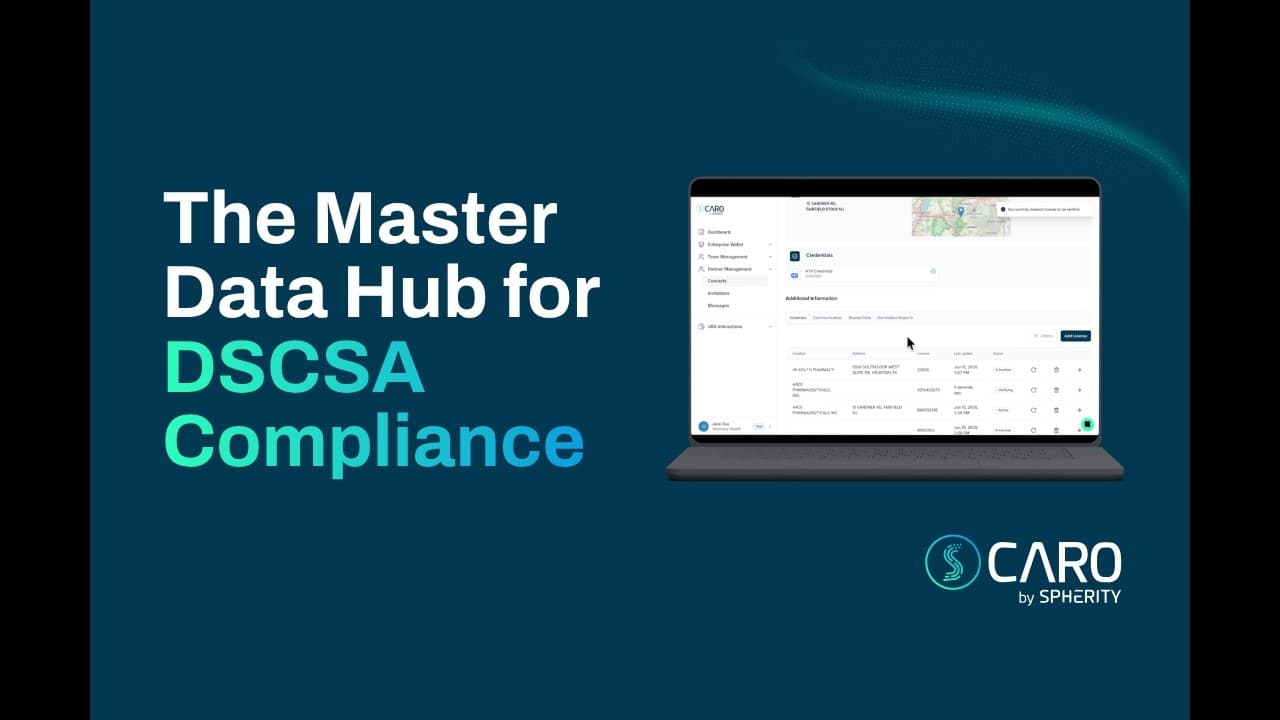
The Master Data Hub for DSCSA Compliance
Every drug in the US supply chain must be traceable under DSCSA. Yet, many companies still manage trading partner verification using disconnected spreadsheets and emails, leading to costly gaps during audits.
WE BUILD Consortium - How to set up a European Business Wallet.
The European Business Wallet is a core component for enabling secure, interoperable, and trustworthy digital identities for organizations across Europe. Spherity is part of the WE BUILD Consortium. Learn more about WE BUILD: https://www.webuildconsortium.eu
Podcasts
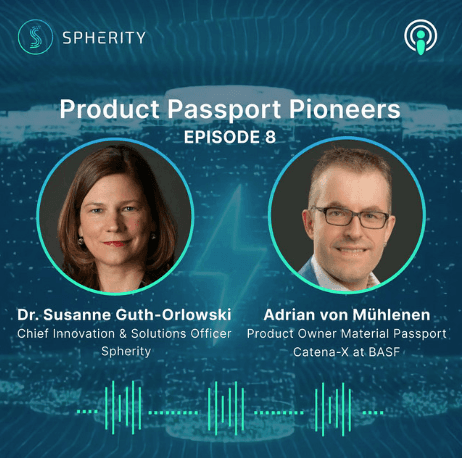
Product Passport Pioneers - #8 with Adrian von Mühlenen, Catena-X and BASF
Adrian von Mühlenen from BASF introduces Catena-X and explains how it’s shaping a pre-competitive framework to meet Battery Regulation requirements like the Battery Passport.
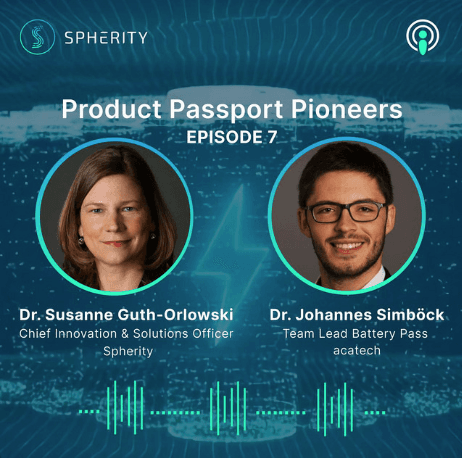
Product Passport Pioneers - #7 with Dr. Johannes Simböck, Acatech
Dr. Johannes Simböck from Acatech shares the latest on the Battery Pass project and Acatech’s role in shaping Germany’s approach to the Digital Product Passport.
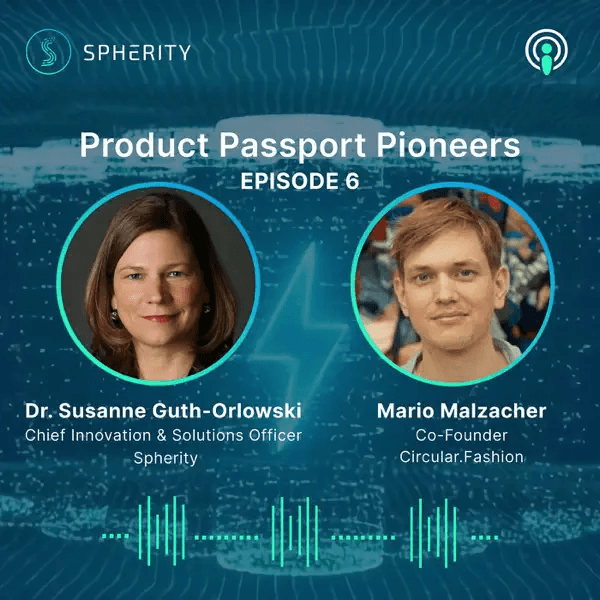
Product Passport Pioneers - #6 with Mario Malzacher, Circular Fashion
Mario Malzacher, co-founder of CircularFashion, discusses his work advancing the circular economy in textiles and shaping digital product passport standards through projects with the BMWK and European Commission.
Webinars
Webinar Recording (1/4): eIDAS 2.0 – Regulatory Momentum for the EUDI Business Wallet
Webinar recording on eIDAS 2.0 covering regulatory developments, business cases, and use cases for EUDI Business Wallets. Webinar held in German.
Webinar Recording (2/4): eIDAS 2.0 – Technical Implementation and Security of the European Business Wallet
Watch the webinar recording by Spherity and PwC Germany on the technical implementation of the European Business Wallet under eIDAS 2.0. Explore partner onboarding, Security by Design, Zero Trust models, and flexible cloud/on-premise deployment options.
Webinar Recording (3/4): Know Your Customer (KYC) under eIDAS 2.0 – Driving Efficiencies with the EUDI Wallet
With the introduction of eIDAS 2.0, a new European identity ecosystem is emerging that will fundamentally transform core business processes such as identity verification. Together with PwC Germany, Spherity is exploring the path from new regulation, including AML requirements, to practical enterprise implementation in a four-part webcast series.